Montreal International Game Summit 2009

Montreal, Video Games

Montreal International Game Summit / Sommet international du jeu de Montréal

This week I attended the Montreal International Game Summit, a professional conference for game developers. Since that is not my profession (yet), I managed to get a free pass as a student volunteer. This was a compelling arrangement, even if it meant I didn’t always have my choice of presentations (I particularly regret missing Brenda Brathwaite.) Fortunately, the talks I did attend were also terrific, so I thought I might share some of what I learned.

Jason Graves – The Music of Dead Space

Did you notice the music in Dead Space? Neither did I, yet it’s an absolutely fundamental element of the horror genre. Composer Jason Graves explained the unique challenges involved in creating “the scariest game ever”. He explained how a soundtrack with consistent themes and progressions makes the player feel safe and strong, so an effective horror soundtrack has to be dissonant and arrhythmic. His compositions were partly inspired by the surreal techniques of Modernist composers, including odd directives that are difficult to express using standard music notation (ex: play this scale as quickly as you can.)

In a fascinating intersection of music and programming, each track in Dead Space has four dynamic layers of intensity. The chosen layers depend partly on the player’s distance from objects in the environment labelled as “fear emitters”. These objects are usually monsters, but can also include hallways, corners, bodies, etc. The music slowly crescendos as the player approaches these objects, a subtle and interactive method of inducing dread.

Nathan Vella – Indie in 2D

Capybara Games is an independent game studio that assembled from members of the Toronto IGDA. Their premier game is Critter Crunch for the PS3 and iPhone, an awesome throwback to the era of “hardcore puzzle games” (think Yoshi’s Cookie) with gorgeous art and animations.

Co-founder Nathan Vella talked about finding the right people for a video game startup; real partners who share your creative vision. He explained how nearly everyone Capybara hired had been introduced through friends and acquaintances. The hiring process for a small company should be casual and instinctual: hang out, have a conversation, look for shared passions.

He also emphasized the importance of a shared aesthetic goal. He revealed the piece of concept art that served as the vision for Critter Crunch, and showed how little the final game diverged from it. Every team member kept that concept piece on their desk, ensuring that everyone pulled in the same direction.

Randy Smith – How To Make Games That Aren’t Fun

Randy Smith is a game industry veteran. Formerly a game designer at Looking Glass studios, he recently co-founded the indie studio Tiger Style Games and released the excellent arachnid simulator Spider: The Secret of Bryce Manor for the iPhone.

In his presentation, he explored the question: do games need to be fun? This is ostensibly the metric by which video games are judged. However, in other media there is plenty of room for work that is engaging and worthwhile without being “fun” (ex: the film Schindler’s List).

Randy noted that many games have dark themes (death, murder, loss, anger) but treat them in a very light manner. They neglect to explore the consequences and ramifications of actions and events. As Penny Arcade recently demonstrated, Nathan Drake kills hundreds of minions without concern or guilt. While such games are entertaining, the scarcity of games that address the human condition in a serious way is emblematic of the immaturity of our medium.

While he didn’t have an easy answer for how to address these issues, he proposed a thought experiment “not fun” game called Hospital Director. He suggested giving the player choices with no right answer: should a busy hospital send an overworked doctor home or risk her making a mistake? He also put forward some ideas about creating emotional connections and leveraging interactivity.

Marc LeBlanc – Mechanics, Dynamics & Aesthetics

I’ve written about my own take on the MDA framework, but at MIGS I had an opportunity to meet one of its co-creators. At the end of his presentation, I took the chance to ask him two burning questions I had since reading his paper:

Do you feel MDA is compatible with Scott McCloud’s six layers of art? If so, how do they intersect?

Prefacing his response with the fact that he had read Understanding Comics a long time ago, he replied that to him the six layers of art purely described games at the Aesthetics level. In that sense, he asserted that McCloud’s layers are actually orthogonal to MDA. He was also sceptical of McCloud’s system where artists “accumulate experience and level up” to gain access to the esoteric aspects of art.

According to MDA, the Aesthetic level only includes emotional responses in the player that were intended by the designer. Why make that distinction?

Marc replied that MDA is intended as more of a design tool than a criticism paradigm. Thus, an unintended unpleasant aesthetic response should really be considered a flaw and therefore be fixed in the design phase. He conceded that there was room for emergent aesthetic responses, and that designers should pay close attention to such player behaviour.

I copied Marc’s answers above from memory, I apologize in advance for failing to capture shades of meaning. I may address my own views about his answers at a later date.

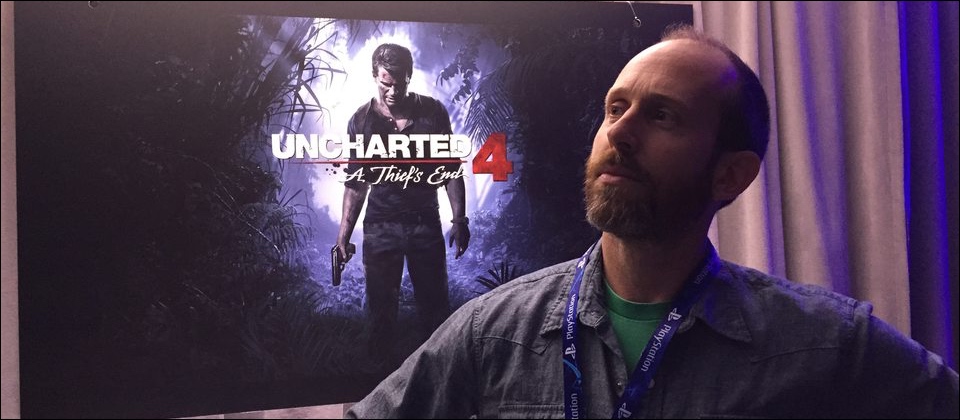
Chris Hecker at MIGS

Chris Hecker – Meaningfully Mass Market

Call of Duty: Modern Warfare 2 was the biggest entertainment launch of all time, making $550 million dollars in one weekend. Sensationalist headlines often tell us that the video game industry is now bigger and more profitable than Hollywood. In his presentation, Chris Hecker revealed the numbers behind such claims and explored the idea of what it means to be meaningfully mainstream.

While video games are making record profits, they lag behind film and music in terms of unit sales. To quote someone who had the good sense to take notes at the presentation:

Gone With the Wind, the most successful film by revenue after adjusting for inflation, sold 35 million “units” in the United Kingdom alone in 1940, at which point that country had a population of 43 million. Even more astonishingly, it sold 202 million tickets in the United States — which had a population of only 130 million at the time. “Everyone went twice!” Hecker exclaimed. “This is mass market reach.”

Put otherwise: “Celine Dion is beating every game we’ve ever made.” He also refuted the claim that the average gamer is 35 and female. When “games” are deceitfully defined to include cards and board games, then two main market groups emerge: 18-34 males and senior women. These two groups average to a mythical 35 year woman who is not at all representative of the gaming demographic.

How can games avoid the “cultural ghetto” that comic books have fallen into? Chris asserts the answer is to target a more varied audience and take more creative risks:

Not all bands are trying to make Thriller. They’re not all trying to hit every single person in their entire audience with a single work, which we try to do routinely. We have such incredibly narrow sets of users that we don’t actually have a reasonable description of a mass market audience. Film can do both The Dark Knight and Eternal Sunshine of the Spotless Mind, and it makes the medium richer for it. You can rent one when you’re in one mood, and the other when you’re in another mood. We don’t provide for that.

He concluded with an introspective challenge to game developers: “What are you trying to say, and why? And are you trying to say it with interactivity? If you can answer those, you’re on the right track.”

Finally, I also attended presentations by Jakub Dvorsky of Amanita Design, Jason Della Rocca, Jeff Goodsill, Paul Winterhalder, Valve’s Jason Holtman, Jonathan Cooper and Dorian Kiken from Bioware, and a business panel featuring Clint Hocking. I regret not being able to reproduce your great talks from memory!

MIGS was a terrific experience, I learned so much and was surrounded by people with a passion for game development. I’ve thankfully taken some of that energy home with me, to reinvest in making and writing about video games.

Photographs by CasualCapture.

→ No CommentsTags:  ·  ·  ·  ·  ·  · 

Postmortem: Norwegian Wood

Programming, Video Games

The project that became Norwegian Wood began in late April of this year. With school winding down and the weather heating up, I felt the itch to tackle something new. By chance I had met a number of like-minded people over the winter; students with big ideas and aspirations of working in the game industry. Inspired by this collective potential, I decided to reach out to my local friends and colleagues about coming together to make a game over the summer.

The response was overwhelming; of the nine people I had e-mailed, seven of them were interested in participating. The project was suddenly much larger than I had anticipated, but I didn’t have the heart to turn anyone away. The eight of us (Henk Boom, Thomas Hibbert, Phil Jones, Renaud Bédard, Alex Charlton, William Mitchell, Kyle Sama and I1) formed the facetiously titled collective No Fun Games.

Pulp Characters by Phil Jones

You might be surprised to learn that our original game idea had nothing to do with music, shoot ‘em ups or The Beatles. While we explored a number of different game ideas, we settled on creating a murder mystery game set in an JRPG-style lumber town. We gave the development version the nickname Pulp2.

Pulp‘s main character was “Penny”, a local girl with a knack for mysteries. She teamed up with retired Sherlock Holmes analogue “Detective Powell” to solve the murder of his former partner “Dr. Watson” (we never really settled on official names). You can see Phil’s concept art for some of the characters above.

We developed an elaborate back story which outlined the motivation behind the murder and its connection to the protagonists. However, our ideas for the game’s actual plot and structure were little more than a skeleton. Truthfully, we possessed neither the inclination nor the talent to write good fiction and this was ultimately the game’s downfall.

No Fun Games - Pulp

On the programming side, we put together a basic game engine in Python with the help of the Pygame and PyOpenGL libraries. It gave us the bare essentials, allowing us to add actors to the screen and assign them behaviours. As seen above, we created a simple world for Penny to run around and interact with (the Fez spritesheet was placeholder art lent to us by Renaud).

Sadly, this is as far as the Pulp project ever got. Despite our best intentions, we drifted apart over the summer. Everyone had personal commitments, internships, and travel plans. We simply didn’t have the time or motivation for leisure coding. By July, Pulp had reluctantly become vapourware. Fortunately, this wasn’t the end of No Fun Games.

By late August, things in my life were starting to slow down. I was back living in Montreal (after spending the summer at IBM in Ottawa), and had a couple of weeks off before the fall semester. Blessed with free time, I decided to reconnect with my teammates for a final sprint. Naturally, we wanted to release something after all our hard work.

Of course, not everyone had the luxury of time off. While we all wanted to participate, only Henk, Thomas and I had the hours to spare. Our artist Phil was also interested, but couldn’t commit to the heavy art demands of the murder mystery concept. With this in mind, we decided to drop that idea and reuse the engine we had created to pursue an entirely different genre.

Branching Pulp into Norwegian Wood

The concept for Norwegian Wood came from our desire to explore the burgeoning intersection of music and gameplay. We wanted to create a game where listening and following the rhythm played a strong role in the player’s experience, but less directly than a game like Rock Band.

This idea manifested as a shoot ‘em up game where the bullet patterns are timed to the individual instruments. The decision to use The Beatles’ music was somewhat incidental; I happened to be listening to Rubber Soul when the game concept occurred to me. However, the song has certain qualities that make it rather ideal. For instance, the notes are quite discrete, making it easy to divide the instruments and record timestamps. More importantly, using a calm lilting ballad with subtle dark undertones contrasted nicely with the upbeat synth-metal used in most shoot ‘em up games.

Norwegian Wood Prototype

Henk, Thomas and I got together at school to work on the game, working nearly full time for two weeks. We managed to create a playable prototype within a few days, then put the majority of our work into refining and iterating on the core gameplay. We also placed a strong emphasis on player feedback, bugging everyone around us to playtest it.

After chasing down the cross-platform bugs and ironing out the details of deployment, we finally released Norwegian Wood in late September. Thanks in large part to friends on Twitter spreading the word, we’ve had thousands of hits, hundreds of high scores and some very positive feedback. We’re thrilled that so many people have enjoyed our game, and promise to put all that excitement right back into making more of them.

To summarize Gamasutra-style, here are some lessons we learned during development:

What Went Right

1. Working Together Locally
While most of the work on Pulp had been completed remotely, it came at a cost to communication and motivation. For Norwegian Wood we decided that there is really no substitute for face-to-face time and met up in person every day. This was extremely effective, both for making consistent measurable progress and sharing a common creative vision.

2. Recording Global High Scores
The online high score table was a minor last-minute addition to the game. However, as Eric Swain pointed out in his insightful Indie Spotlight, it added a ton of value in terms of competition and replayability. “Even after all these years and innovations it is still a huge motivation to play. [...] It isn’t all about competition, but the close knit community that get formed in that competition.”

3. Sidestepping Copyright
It took a lot of thinking to come up with a way to release a music game without infringing on The Beatles’ copyright3. Despite our doubts, having the user provide their own mp3 turned out to be a very successful strategy. Of course, it’s a shame that we picked the one band whose music can’t be downloaded legally. In the future, we’d very much like to reexplore this concept with Creative Commons licensed music.

What Went Wrong

1. Big Team Woes
Starting out with such a large development team on Pulp was a major challenge. Responsibility was spread too thin, and no one felt like they had creative control of the game on an individual level. In retrospect, I would recommend a team of no more than 4 for your first indie collaboration. Furthermore, it helps to have a fairly autocratic team leader.

2. Summertime Blues
I had assumed that summer would be the perfect time for students to pursue a side project. Working nine to five at an internship means having evenings off and lots of free time, right? Sadly, I was way off. The temperament of summer is lazy and leisurely; it’s hardly a season for picking up additional work. Furthermore, working full-time turns casual hacking into an unpleasant chore. Counter-intuitively, students would much rather attempt side projects while they’re juggling exams and assignments in the fall.

3. Storytelling Failure
We were incredibly naive about the process of writing a story for Pulp. We had the big picture ideas and the game mechanics, and just assumed that the moment-to-moment narrative experience would flow from that. We quickly discovered that writing a good story is an extremely demanding task, one we were ill-equipped to handle. Lesson learned: if you insist on having a narrative element to your game, make sure you have a dedicated writer (or semionaut) on the team.

Thanks again to everyone who was involved in Norwegian Wood, including those of you who playtested it and helped spread the word on release day. Making this game was a terrific experience, and it taught me a great deal about game design, programming and project management. I look forward to applying these lessons to my next game!

1 Ben Abraham was also briefly involved as music director, he wrote us a lovely dirge for Pulp.
2 Funny how Pulp turned into Norwegian Wood. The arboreal theme is coincidental.
3 Actually, Nick suggested this approach. Thanks Nick!

→ 8 CommentsTags:  ·  · 

Norwegian Wood

Programming, Video Games

The game project that I’ve been quietly working on this summer is finally ready for release! It’s a rhythm-based shmup inspired by the Beatles song Norwegian Wood (This Bird Has Flown). You can download it for PC, Mac and Linux on the game’s website:

Norwegian Wood – No Fun Games

I have more to say about the game’s development process, but I’ll save that for a postmortem post later this month. For now, enjoy the game, and please leave your feedback and suggestions in the comments below.

→ 4 CommentsTags:  ·  · 

Mechanics, Dynamics & Aesthetics

Video Games

This summer I’ve been casually following Game Design Concepts, Ian Schreiber’s experimental online game design course. The curriculum has covered a number of thought-provoking concepts, but the real light bulb moment for me came in his discussion of the MDA framework1.

Robin Hunicke, Marc LeBlanc and Robert Zubek defined MDA in 2001 [PDF link]. It stands for mechanics, dynamics and aesthetics, the three layers that define a game. These words are often thrown around casually in game design discussions, but in MDA they have very specific meanings:

  • Mechanics are the formal rules of the game. These rules define how the game is prepared, what actions the players can take, the victory conditions, the rule enforcement mechanisms, etc.
  • Dynamics describe how the rules act in motion, responding to player input and working in concert with other rules. In programming terms, the “run-time” behaviour of the game.
  • Aesthetics describe the player’s experience of the game; their enjoyment, frustration, discovery, fellowship, etc. In simple terms, what makes the game fun?

Pac-man A.I.

We can illustrate these concepts with the classic game Pac-Man. The pathfinding logic of the enemies is defined by a formal set of rules. Each ghost has a unique seeking mechanic: Blinky targets the tile that the player currently occupies, while Pinky targets four tiles ahead. Together, these rules create a dynamic wherein the player becomes boxed in by Pinky in the front and Blinky from behind. The enemy dynamics present a challenge to the player, creating an aesthetic of fun and excitement.

In his post on MDA, Schreiber also offers the following example:

In a First-Person Shooter video game, a common mechanic is for players to have “spawn points” – dedicated places on the map where they re-appear after getting killed. Spawn points are a mechanic. This leads to the dynamic where a player may sit next to a spawn point and immediately kill anyone as soon as they respawn. And lastly, the aesthetics would likely be frustration at the prospect of coming back into play only to be killed again immediately.

MDA - Designer vs. Player

As illustrated above by Clint Hocking2 (lead designer of Far Cry 2) and Ben Abraham (blogger, musician, Far Cry 2 enthusiast), designers and players experience games from different perspectives.

Game designers only have direct control of the game’s mechanics; the mechanics work together to generate the dynamics, which in turn generate the aesthetics. They want to make their games fun and engaging, but only have indirect control of the player’s experience. Schreiber calls this a “second-order design problem” and it’s the reason why game design is challenging. Thus, designers tend to see mechanics and work outwards.

Conversely, players are immediately familiar with their own emotional response to a game regardless of whether they understand the underlying rules. One can enjoy Wii Sports tennis without necessarily knowing the exact dimensions of the virtual court. Only through hours of observation and deduction do the dynamics and mechanics gradually become clear.

We can see the contrast between these two perspectives in Clint and Ben’s writing about Far Cry 2. Clint’s GDC 2009 presentation reveals how the game inflicts “random, small losses” in order to keep the player alternating between “composition” and “execution”. This explains how the attrition mechanics create dynamics that force the player to improvise, resulting in a challenging and immersive aesthetic. Ben, on the other hand, insightfully chronicles the aesthetics of games. This does not imply that his appreciation is shallow, rather that he sees games in terms of personal experiences and emotional responses rather than abstract systems of rules.

McCloud's Six Layers of Art

How do the three layers of MDA compare with the six layers of art proposed by Scott McCloud? Schreiber suggests that they are nearly parallel: “mechanics are roughly equivalent to [...] structure; dynamics are analogous to craft; and aesthetics are similar to surface.” While there is ostensibly strong similarity between the two frameworks, I believe that they diverge on a crucial point.

McCloud’s six layers of art are ranked according to importance; novices concern themselves with surfaces while masters concentrate on ideas and forms. Schreiber compares aesthetics to McCloud’s concept of surface, which are the “production values, finishing, the aspects most apparent on the first superficial exposure to the work”. However, McCloud defines ideas, the innermost layer of art, as “the impulses, the ideas, the emotions, the philosophies, the purposes of the work”. This is also strongly analogous to MDA’s definition of aesthetics3. The idea that the innermost and outermost layer are so strongly related is irreconcilable within McCloud’s strongly ranked framework; why then do aesthetics make perfect sense within MDA?

I suspect the reason is that, while MDA’s three layers are also ordered, they are not ranked according to importance or value. Mechanics, dynamics and aesthetics are equally valid and interesting perspectives for understanding a game. While surface is superficial and inconsequential, aesthetics describe concepts that are crucial to an artistic study of games: sensation, discovery, fellowship, expression, challenge, narrative, etc.

McCloud’s six layers of art and MDA are both useful ways of understanding and deconstructing video games. However, this fundamental difference prevents us from drawing easy parallels between them.

1 Months ago Nels recommended I read about MDA, good advice I managed to completely forget. Apologies!
2 Correction: CLINT HOCKING.
3 One could argue that McCloud’s idea/purpose refers to the emotions and impulses of the creator, not the player.

→ 7 CommentsTags:  ·  · 

Gaming Made Me

Video Games

This week I’ve been enjoying the “Gaming Made Me” series over at Rock, Paper, Shotgun, where various journalists and designers1 are discussing “gaming education and influences: the games that made us the kind of people that we are today.”

What’s interesting about the series is the contrast between how unremarkable many of these games are in a larger sense and how important they are on a personal level. Did the creators of Speedball 2: Brutal Deluxe know that they would inspire Jim Rossignol’s lifetime of gaming? Do these influential games have common characteristics, or are they imbued with greatness by the emotion and (later) nostalgia of the player?

I doubt these questions have easy answers, but I’d like to explore these themes by profiling five games that have greatly influenced my life.

Tank Wars

Tank Wars was the precursor to games such as Scorched Earth and Worms. Players took turns firing at each other with a variety of explosives, adjusting their shots for gravity and wind. It even featured crude destructible environments, a neat trick for the era.

Tank Wars was not the first game I ever played (that honour likely goes to Super Mario Bros. on my friend’s NES.) It was only one of the many DOS games I played on another friend’s old computer, alongside titles like Hugo’s House of Horrors and Jazz Jackrabbit. Why, then, does Tank Wars stand out so strongly in my memory?

I believe it’s because Tank Wars was the first game I ever played that had cooperative multiplayer. In other games you could pass around the controller, time-sharing the protagonist. However, Tank Wars gave me and my friend individual agency, then expected us to work together to overcome the computer. This simple change made a world of difference. We had to coordinate tactics. We were accountable to the “team” for our performance. We shared victories and losses.

Michael Abbot pronounced “co-op gaming” as his 2008 Game of the Year. I suppose it’s my pick for GOTY ’93.

Super Mario RPG

I’m sure this will make some of you feel quite old: Super Mario RPG: Legend of the Seven Stars, released for the SNES in 1996, was indeed the first RPG I ever played.

A bit of context for this: my parents reluctantly bought me a Super Nintendo for my birthday in the Spring of ’95. It was my very first video game system, and I cherished it. In its box was a card that urged me to subscribe to Nintendo Power magazine, so I dutifully handed over my allowance money later that Summer.

Each issue included a feature called “Epic Center” entirely devoted to RPGs, a genre concept that was entirely new to me. Stories that went beyond the instruction manual? Characters with personalities? Giant worlds to explore? These ideas blew my little mind, and I poured over each volume as if it were gospel. After the cover of issue 82, I knew exactly what I wanted for my birthday the following year.

In many ways, the action elements of Super Mario RPG made it an ideal starting point for a newcomer to the genre. The light platforming eased me into new concepts, such as turn-based combat and equipping items. Inventory management was particularly problematic; it took me ages to figure out that you could revive fallen party members with items. On the other hand, it taught me a variety of unusual habits that I carried with me to other games. I timed my attacks with the A button in Chrono Trigger and Pokémon, only realizing years later that most RPGs didn’t have such a system.

I’ve played through Super Mario RPG many times over the years, and it has held up very well with age. I still chuckle at the silly one-liners (“Who do you think you are? Bruce Lee?”) and quirky enemies (among them a wedding cake and a pastiche of the Power Rangers). It’s terrific to see the game’s legacy live on through the Paper Mario and Mario & Luigi series.

Goldeneye 007

It must be difficult for people who grew up on PC games to understand the fuss over Goldeneye. The success of Doom inspired hundreds of imitators, planting the roots of first person shooters firmly in the PC market. At the time of Goldeneye‘s release, they were already enjoying online deathmatches in Quake. Why would anyone get excited over a movie tie-in with clunky controls and unremarkable graphics?

For those of us raised on Nintendo, Goldeneye was a completely new experience. Still becoming accustomed to the third dimension introduced by Super Mario 64, we were now allowed to navigate this space from a native angle. I didn’t just control a character on the screen, the person on the screen was me. In other words, Goldeneye was the first game that felt truly immersive.

Despite my earlier claims, Goldeneye was also innovative even in comparison to its PC brethren. For instance, it moved the focus of FPS games away from constant killing. Goldeneye rewarded stealth, and encouraged the player to silently and effectively achieve the mission objectives. This gave the game a strong sense of pacing, with highs and lows of intensity.

Unfortunately, as Mitch Krpata pointed out, the game has not aged well. The graphics are so crude that it’s often difficult to tell what’s going on, and the framerate is abysmal in multiplayer matches. Still, I credit Goldeneye for introducing me to a genre that I have come to love.

Starcraft Campaign Editor

In the early 2000′s, my parents finally bought the family a computer. This was very exciting to me, as I finally had a chance to catch up on the last decade of PC games. Having enjoyed Warcraft 1 & 2 at a friend’s house, I knew exactly which game I wanted to play first.

Despite being a terrific RTS, I’d be hesitant to call Starcraft an important influence on my gaming tastes today. In fact, I suspect that less than half of my playing time was actually spent in-game; it was the Campaign Editor that really captured my imagination.

If you’ve never used Starcraft‘s editor, you might not know how robust it is. Beyond being able to shape the terrain, place resources and modify unit statistics, the Campaign Editor allows you to define triggers. A simplified form of event-based programming, they implement logic such as:

CONDITIONS:
-Player 1 kills at least 1 any unit.
ACTIONS:
-Display for current player: You have slain your first foe!
-Modify resources for Current player: Add 100 Ore.

Using triggers, I could coax Starcraft into becoming any kind of game I wanted. I experimented with making RPGs, racing games, and sci-fi survival horror. Furthermore, it was easy to import the custom maps to Battle.net and test them out with other enthusiasts on the “Use Map Settings” playlists.

In terms of personal “gaming education and influences”, Starcraft‘s Campaign Editor may be the most important. It planted the seeds of programming and game design in my young brain, seeds that have blossomed into an academic pursuit of Software Engineering and (hopefully) a future career in game development. I can only hope that LittleBigPlanet and Kodu will do the same for the little nerds growing up today.

Final Fantasy XI

Unfortunately, not all of my “gaming education” has had a net positive effect on my life. I played Final Fantasy XI from April 2004 until January 2007, from the end of my last year of high school until halfway through my first year of university2. At the peak, summertime with no school and a part-time job, I suspect I played over 40 hours a week. It’s shocking and shameful for me to put that into numbers, but it’s the truth.

Some people talk about being “addicted” to an MMO. This may be an accurate metaphor for some people, but in my life I think it was much more subtle. I didn’t fail out of school, miss work or even stop learning karate. I suspect it wasn’t externally obvious that I played an MMO at all.

However, the part of my life that the game did consume was my leisure time. Instead of watching TV, reading a book, exploring a new hobby or playing a different game, I would play Final Fantasy XI. That’s exactly the problem with MMOs: no matter how much time you put into them, you can always benefit by playing more. As Jonathan Blow explained: “It doesn’t matter if you’re smart or how adept you are, it’s just how much time you sink in. You don’t need to do anything exceptional, you just need to run the treadmill like everyone else.”

There were some positive aspects to play Final Fantasy XI. I got to play and interact with people from all over the world, including one or two that I keep in contact with to this day. I learnt quite a bit about the psychology of MMO players, including the strange social hierarchies and superstitions that develop. Most importantly, participating and coordinating with ~60 other people to take down some of the strongest monsters in the game was a truly unique gameplay experience.

Playing Final Fantasy XI made me into the person I am today because I’ve learnt from my mistakes. It was my first and last MMORPG, an unforgettable experience that I hope never to revisit.

1 Check out Michel’s take on the series as well.
2 In Quebec, there are 2-3 years of CEGEP between high school and university.

→ 8 CommentsTags:  ·  · 

Written by Matthew Gallant, hosted by A Small Orange, powered by Wordpress, theme based on Basic.