Jazz is a fascinating genre of music. Born out of slavery in the Mississippi Delta along with its sister the blues and defined by complex melodies and improvisation, it became the framework for some of the greatest musical minds of the 20th century.
To those of us raised on three chord rock and 2:50 pop songs, however, jazz can seem a tad impenetrable. The songs often lack a traditional structure, and change rhythm and melody on the fly. Lacking a paradigm within which to understand the music, it can be difficult to pursue the active, focused listening required to properly grok it.
I don’t pretend to have any kind of jazz credentials; I wouldn’t even call myself a serious enthusiast. However, if you’re a rock music fan interested in exploring jazz but unsure of where to begin, I may have a few suggestions. By finding parallels between rock and jazz artists, I hope to make bridging the gap a little easier.
If you listen to Frank Zappa, you might be interested in…
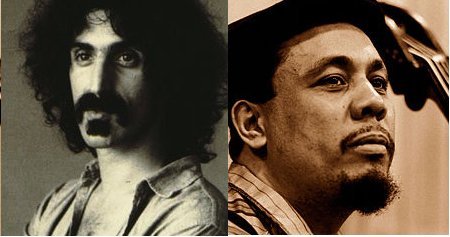
Charles Mingus – Better Git It In Your Soul
If you’re a fan of Frank Zappa, you’re probably already comfortable with strange melodies, large horn sections and improvisation. While he experimented with jazz fusion on many of his successful mid-70’s solo albums (such as Waka/Jawaka and The Grand Wazoo) the influences in his music can be heard as early as 1969’s Hot Rats. Conversely, it’s not uncommon to hear a modern jazz band perform their own interpretation of “Inca Roads” or “Peaches en Regalia.”
Charles Mingus’ music greatly influenced Zappa’s sound. Indeed, he’s one of the few jazz composers name checked in the liner notes of Freak Out!, listed under “These People Have Contributed Materially In Many Ways To Make Our Music What It Is. Please Do Not Hold It Against Them.” Mingus shares Zappa’s affinity for punchy, energetic and strongly emotional music. I would highly recommend his seminal recording Mingus Ah Um, widely considered to be one of the greatest jazz albums of all time.
If you listen to Van Halen, you might be interested in…
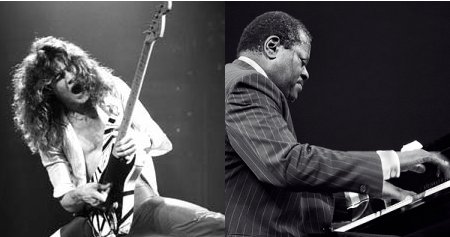
Oscar Peterson Trio – Tristeza
This is a bit more of a stretch than my last recommendation. One of the signature elements of Van Halen’s sound is Eddie Van Halen’s virtuoso guitar work. Famous for popularizing tapping (using both hands on the guitar’s neck to play notes extremely quickly), Eddie is considered one of the greatest rock guitar players of all time. In that respect, he has quite a bit in common with Oscar Peterson, a man once named the “Maharaja of the keyboard.”
The late Oscar Peterson grew up in the Afro-Caribbean district of Little Burgundy in Montreal. His prolific career spanned over 50 years, in which time he produced literally hundreds (!) of albums. It’s difficult to know where to start exploring his music; unlike many jazz artists he didn’t have a single magnum opus that defined his career. However, the Oscar Peterson Trio’s 1970 release Tristeza on Piano is a definite highlight.
If you enjoy Animal Collective, you might be interested in…
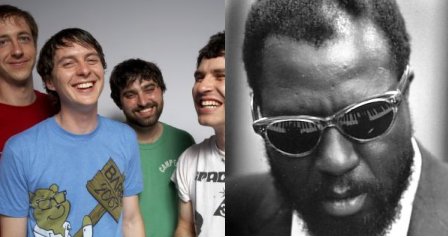
Thelonious Monk – Straight, No Chaser
Not necessarily Animal Collective per se, but any band that’s actively involved in pushing the boundaries of music and sound. I’m talking about experimental bands such as Battles, The Fiery Furnaces and The Mars Volta. If you enjoy artists who explore new ways of thinking about rhythm and melody, then Thelonious Monk’s innovative sound might appeal to you as well.
Wikipedia had a surprisingly insightful description of what exactly made Thelonious Monk’s music so revolutionary: “His compositions and improvisations are full of dissonant harmonies and angular melodic twists, and are impossible to separate from Monk’s unorthodox approach to the piano, which combined a highly percussive attack with abrupt, dramatic use of silences and hesitations.” I particularly enjoy his exploration of dissonance, you can hear it used to great effect in the audio sample embedded above. His fast tempos and jumpy piano playing set the foundation for the subset of jazz known as bebop. If you’re interested in exploring his music, I would begin with the 1957 collaboration Thelonious Monk with John Coltrane.
I hope these three recommendations have given you a potential starting point for exploring the genre. Of course I’m still green when it comes to jazz, so please educate me by leaving your artist and song suggestions in the comments below.


July 11th, 2008 at 11:31 am
When I was taking keyboard courses a couple of years ago, my teacher introduced me to Medeski Martin & Wood… I hear a lot of rock, trip-hop and even industrial elements in their music. I’ve seen them in show at the Montréal Jazz Festival a couple of years back, and the keyboardist blew my mind.
I only know the album called “The Dropper”, I don’t know if the rest is similar in style…
http://en.wikipedia.org/wiki/Medeski_Martin_&_Wood
July 11th, 2008 at 9:45 am
John Coltrane – Giant Steps is my all time favourite Jazz album.
July 11th, 2008 at 10:16 am
This is a very clever way to introduce people to jazz. And I’m in a similar place – I like jazz a lot but don’t really know too much about it. I’d second Giant Steps and I think Kind of Blue by Miles Davis is a classic for a reason. I’ve been enjoying a couple of Wes Montgomery tracks recently too. Oh, also, you might want to try Brad Mehldau – he’s a classically trained pianist who’s really great. The album I have is called ‘Largo’ and it’s one of my faves.
July 11th, 2008 at 3:22 pm
I used to be more into Lindy Hop than I’ve ever been into video games. And so I was way into Count Basie, Oscar Peterson and the like. George Gee in New York also has some terrific music.
July 12th, 2008 at 2:30 am
Thanks for the suggestions guys, I’ll be sure to check them out.
@Skrud: Definitely a great album.
@Nav: I like Kind of Blue, but I prefer Birth of the Cool on the whole. I have a lot of trouble getting into down-tempo jazz. I’ll check out those other artists you’ve mentioned as well, thanks.
July 15th, 2008 at 10:55 pm
Nice round up man.
A number of my friends find jazz rather confusing. In fact, one specifically described it as “confusing crap” or “bullshit improvisation”. I, however, am a huge fan of live jazz and jazz from the radio. Specifically Adelaide’s local 93.7FM on a Sunday, where a 70 year old jazz musician continues to play wonderful tracks for two hours, complete with personal anecdotes drawn out from his memory regarding anyone and everyone he’s met that’s ever been anybody in the jazz scene while he’s been alive.
Awesome show.
July 16th, 2008 at 12:58 am
That sounds really cool, like a jazz version of Little Steven’s Underground Garage (I’m not a huge fan, but he always has interesting stories.)
Have you ever taken your friends to a live jazz show? I find the music is always much more striking and personal in concert, especially during the Montreal Jazz Festival.
November 9th, 2008 at 2:51 pm
Sorry to be months late to the party, but I wasn’t expecting such wonderfully good musical taste! Anyone who likes Mingus is alright by me: Blues & Roots is probably my favourite record of all time.