hit
counter

Punk & Indie Games

Music, Video Games

Last month, head editor Ben Abraham and his crew of bloggers launched Critical Distance, a game criticism archive and compilation blog. They’ve been doing a terrific job, linking out to fascinating new sites and really expanding the conversation.

With exams over, I recently had a chance to contribute something: a post wherein I attempt to connect my love of indie games with my interest in music history. A quick note about the unusual format: it’s not intended to be an in-depth comparison, just a light exploration of the concept via various game bloggers.

Critical Distance Critical Distance – Punk & Indie Games

If you’re looking for fresh perspectives in video game criticism, then Critical Distance is definitely a website to watch.

Tags: · 

Introduction to Grifball

Video Games

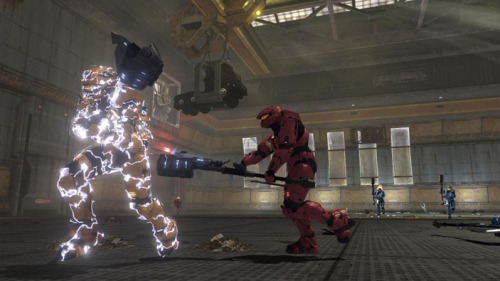
Last month, Tom Armitage wrote an excellent post about consensual play. The term denotes a subset of emergent gameplay1 which relies on both players agreeing to rules of conduct that are not enforced by the game itself.

Tom’s post was also my first exposure to Grifball, a sport-like player-created game mode in Halo 3. Robust mapmaking tools and heavy official support now make it a poor fit for the consensual model2, but Grifball remains interesting both as a case study for emergent gameplay and as a unique well-balanced game mode.

Grifball

→ Read more

→ 6 CommentsTags: ·  · 

Progression in Mother 3

Video Games

With final exams beginning to wind down, I’ve had a chance at last to get back to playing Mother 3, the Japan-exclusive sequel to the cult SNES RPG Earthbound. The game was translated to English by the dedicated fans at Starmen.net, and was finally released last Fall to much excitement and acclaim.

→ Read more

→ 3 CommentsTags:

Your Move, Nintendo

Video Games

Like all stupid ideas, it began on the Internet:

→ Read more

→ 6 CommentsTags: · 

Visibility, Affordance & Feedback

Video Games

This semester I attended “User Interface Design”, a class that encouraged us to think critically about the ways in which people interact with systems. While the course work naturally focused on software interfaces, the principles of good UI design are universal. Whether you’re creating a website, a toaster, a lamp or a door handle, intuitive design relies on understanding human psychology.

In my ongoing quest to contextualize everything I learn in terms of video games, I’d like to explore how the principles of user interface design might be applied to make games more accessible.

→ Read more

→ 12 CommentsTags: ·  ·  · 

© 2007-2026 Matthew Gallant. Powered by Wordpress. Privacy Policy.Mastodon